
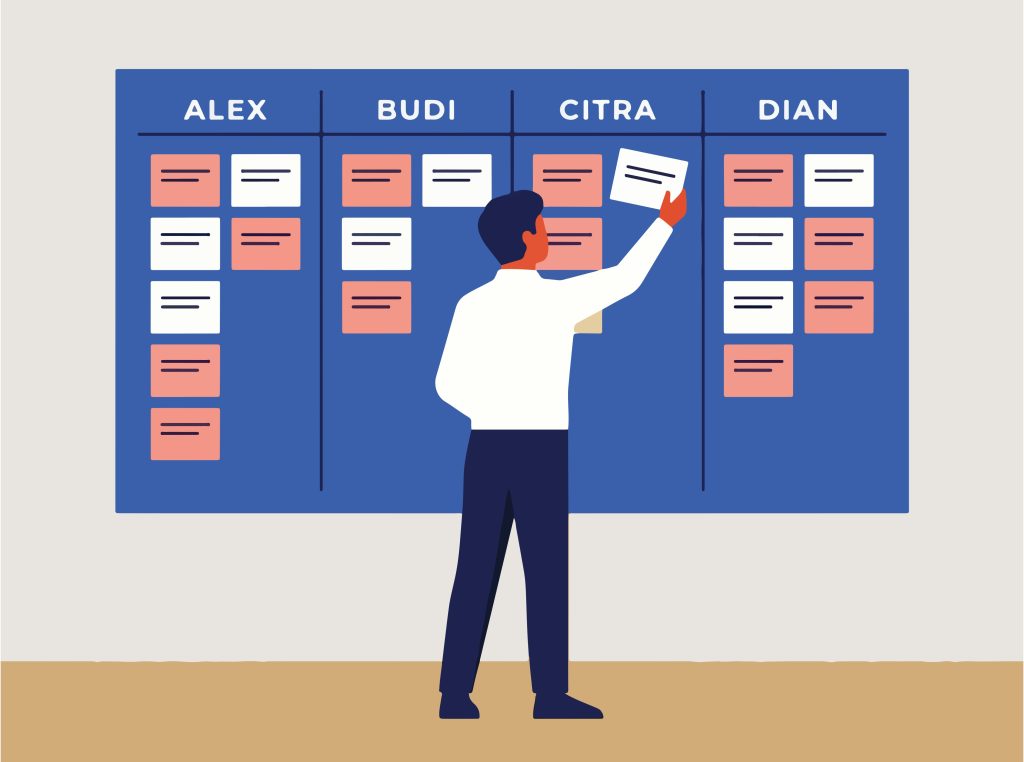
Self-management has become the new ideal of modern work. Leaderless teams, flat organizations, people who “organize themselves.” It sounds good—almost too good.
The problem is that many companies adopted the aesthetic of self-management, but not its discipline. And that’s where the trap begins: confusing freedom with the absence of structure.
Spoiler: self-management is built—and trained.
The modern myth: free teams = efficient teams
There’s a common belief: if we remove control, everything will flow better. But reality shows that teams without clarity are simply lost.
Poorly implemented self-management leads to:
- Bad decisions
- Blurred responsibilities
- Fragmented communication
- And a silent classic: no one knows who owns what
In that context, efficiency disappears—and chaos takes over.
The current reality: freedom, burnout, and absent leadership
After the pandemic, remote and hybrid work reshaped everything. But something subtle happened in that transition:
Many companies said, “I trust you”
when what they really meant was: “Figure it out on your own.”
The result:
- Burnout disguised as autonomy
- Overloaded teams
- Leaders disappearing in the name of freedom
- Communication issues no one is fixing
Self-management started to look more like isolation than autonomy.
So, what is real self-management?
Self-management means knowing what to do, why it matters, and by when—without being chased.
It stands on three pillars:
1. Radical clarity
Clear goals. No ambiguity.
If everything is a priority, nothing is.
2. Explicit roles
Who does what. No gray areas.
Organizational ambiguity is inefficiency.
3. Real accountability
Being responsible for results—not intentions.
Self-management requires maturity. And maturity doesn’t happen by accident.
The invisible system: structure + culture + processes
For self-management to work, one thing is non-negotiable: the system.
- Structure: how work is organized
- Culture: how decisions are made
- Processes: what sustains repetition
Without this, self-management doesn’t scale.
One organized individual can work. A team? Needs rules.
The role of mentoring: training autonomy
Here’s where mentoring becomes critical—not motivational talk, but real development.
Mentoring builds what teams don’t naturally have: judgment.
It trains:
- Prioritization
- Context-based decision-making
- Complex problem reading
- Responsible autonomy
In short, it teaches people how to think better.
Self-management is not the absence of leadership
This is the counterintuitive truth:
The more self-management you want, the better leadership you need.
Because someone must:
- Define direction
- Translate purpose into clear goals
- Maintain coherence
- Intervene when the system breaks
Leadership has changed. It’s no longer about giving orders—it’s about designing context.
How to build self-management without falling into the trap
- Define clear goals and metrics
- Assign ownership to every task
- Create structured follow-up spaces
- Train decision-making skills
- Sustain honest, uncomfortable conversations
Freedom is not free
Self-management is attractive because it promises independence.
But what it demands is responsibility, discipline, and judgment.
Autonomy is not the starting point—it’s the result.
A truly autonomous team is one that:
- knows what to do
- has clear deadlines
- feels supported, not abandoned
That’s what sustains performance over time.
At Aryuna, we work with teams and leaders to turn self-management into a real system: clear goals, defined roles, and processes that support autonomy.
If your team has freedom but no direction—or autonomy but no results—there’s likely something broken in the system.